 Article cover: SpaceX Crew 12 (left to right): Roscosmos’ Fedyaev, NASA’s Hathaway and Meir, and ESA’s Adenot
floating in front of a photo of ISS taken from the approaching Dragon Capsule (SpaceX / NASA, 13-14 February 2026).
SpaceX-Crew 12 launched on Friday 13 February 2026 from Florida taking the multinational crew to the International Space Station (ISS) where they joined ISS Expedition 74/75.
In a flowless flight, the Falcon 9 rocket delivered the Dragon capsule into orbit and this spacecraft docked to the ISS the following day.
Go to
Updates
16 Mar 2026: Sophie's updates.14 Feb 2026: Welcome to ISS.
14 Feb 2026: Docking to ISS.
Background
Crew 12 Launch - 13 Feb 2026.Wightlessness.
Russian space science.
Crew 12 Members.
Crew 12's Science at ISS.
Launch Interviews.
Watch Launch and Docking Broadcasts.
UPDATES
Sophie Adenot's updates and poetry – 16 March 2026
Astronaut Sophie Adenot has been sending regular updates to Toulouse’s website “Cité de l'espace”, that posts all things related to space and particularly Adenot’s activities at ISS. Her updates also appear on the permanent exhibition “Mission εpsilon” in Toulouse, France, also known as the European Capital of Space Aeronautics (Capitale Européenne de l’Aéronautique et du Spatial).
On 16 March Sophie posted a video of a demonstration of how a Gyroscope conserves angular momentum, that stabilises it and makes it “float”. This technology is used to stabilize certain satellites.
On 12 March, Sophie Adenot posted a poem in English (see below) as an announcement to open a competition of poems about space, or Astropoems (Astropoèmes), open to 5- to 15-year-old children. Participants are invited to send their poems in PDF format until 7 May 2026, when Adenot will select the winners. Poems can be sent using an online form available at https://milan-jeunesse.com/mj/actus/astropoemes-un-concours-de-poesie-sur-lespace.
 Sophie Adenot update images from ISS and poster of the “Concour Astopoemes”, a poem competition for children (Cité des l’espace, 2026).
 Sophie Adenot’s poem posted on 12 March 2026 (Text by Sophie Adenot, Cité de l’espace, NASA, ESA, 2026).
 The permanent exhibition “Mission εpsilon” at Cité de l’espaceà, Toulouse, France (Cité des l’espace, 2026).
--O--
Crew-12 welcome ceremony at ISS
14 February 2026
After a successful launch and docking manoeuvres, SpaceX-NASA Crew 12 were welcomed at the ISS by the 3 astronauts of Expedition 74 who were living at the station since the departure of Crew 11 on 14 January 2025: NASA’s Christopher Williams and Roscosmos’ Sergey Kud-Sverchkov and Sergey Mikayev.
Crew 12’s mission “Epsilon” contemplates working at ISS for 8 months.
Commander Jessica Meir congratulated the ground teams of SpaceX and NASA that worked together to achieve yet another successful delivery of astronauts to the ISS. Each member of the crew talked about their experience during training and ascent. This was the first flight to space for Sophie Adenot and Jack Hathaway, and the second for Jessica Meir and Andrey Fedyaev.
 Expedition 74 (top, left to right): Kud-Sverchkov, Williams and Mikayev; and
arriving Crew 12 (bottom, left to right): Fedyaev, Hathaway, Meir and Adenot (SpaceX, NASA, 14 February 2026).
The combined crew formed Expedition 74/75 that will celebrate 25 years of continuous human presence in space, working in scientific research. The main activities for the crew are maintenance and science research that over the years required delivering more than 150 tons of logistics since its launch on 20 November 1998 (see upcoming post on ISS).
 Crew 12 entering ISS through Zenith port. Top: Sophie Adenot and Jack Hathaway.
Bottom: Float and fun (SpaceX, NASA, 14 February 2026).
--O--
Dragon docking to ISS – 14 February 2026
The SpaceX Dragon Capsule successfully docked to the ISS at 20:15 GMT on Saturday 14 February 2026 (same time as that within ISS or Coordinated Universal Time (UTC)).
The event was broadcast live by SpaceX and NASA communicators and begun when Dragon was at around 400 metres from the International Space Station (ISS). Within one hour all the waypoints were passed successfully and in the final 20 metres, docking was controlled autonomously, first completing a soft contact and then securing a hard docking, which activates 12 hooks that secure the vessels together. Shortly after confirming docking, the astronauts were allowed to take off their spacesuits and prepare to board the ISS. This preparation includes an inventory of material used, food and liquid consumed and even liquid collected as urine, as this will be recycled at ISS to recover water.
Dragon docked to Node 2 Zenith hatch, one of the 8 docking ports at the ISS (6 currently in use). Astronaut Chris Williams (one of the current crew of 3 at ISS) prepared the port for the arrival of the crew 12. Among other duties, he was in charge or pressurising the vestibule or small gap between the vehicles.
 Top: View of ISS from approx. 400m as Dragon approaches for docking.
Bottom: View of Dragon’s control panel operated by the pilot and the commander (SpaceX, NASA, 14 February 2026).
 Dragon Freedom at 100m from ISS, then at 1m from Node 2 Zenith port, and finally in contact with the station (SpaceX, NASA, 14 February 2026).
END of UPDATES
BACKGROUND
SpaceX – NASA’s Crew 12's Launch - 13feb2026
SpaceX’s Crew 12 launched successfully on board a Falcon 9 rocket from Kennedy Space Centre’s Launch complex 40 in Cape Canaveral. Florida, USA on Friday 13 February 2026. The Dragon Freedom Capsule fitted at the top of the rocket carried the crew of four to the International Space Station (ISS). The event marked the beginning of an 8-month mission named “Epsilon”.
A Nominal Launch
Preparations commonly start 6 hours before launch, when the astronauts arrive at the Preparation Room for Pre-launch checks of personal equipment and communications. Specialists help them put on their customised suits (donning); followed by a medical evaluation to ensure their fitness to fly. Traditionally, the astronauts play a card game with a member of the team before leaving the room to greet the public and their families before embarking their Tesla vehicles that take them to the launch pad.
Typically, during that short trip, astronauts typically select a piece of music to inspire them for their journey. At the launch pad, they ride a lift pressing the top button that says “Space”. They ring a bell at the top of the tower before they walk along the loading arm to the capsule. Specialists secure the crew into their seats and verify the hatch is closed properly before retracting the loading arm.
 Top: Crew 12 emerging from the preparation zone, boarding their Tesla vehicles after saying goodbye to their families.
Bottom: Pilot and Commander, followed by Mission Specialists walking along the boarding arm (SpaceX, NASA, 13 February 2026).
Two hours before launch Falcon 9 is fuelled. The rocket’s Merlin engines burn two fuels: A refined form of Kerosene “RP-1” and liquid Oxygen “LOX”, the former at ambient temperature and the latter in cryogenic form (chilled to -183oC) to maintain its liquid state.
At launch, the main lifting force comes from the First Stage’s 9 Merlin engines that together produce a thrust of 7,607 kN (kiloneutons), which takes the spacecraft, weighing 549,000 kg (549 metric tons), to an altitude of 70 km, at which point it separates from the stages on top. The Second Stage has a single Merlin engine optimised to work in vacuum that produces a thrust of 1,200 kN, required to insert the capsule into orbit and accelerate it to 7.8 km/sec before separation. The capsule needs to catch up with the ISS to dock in orbit, which means it needs to accelerate to match the ISS' speed (28,000 km/h or 7.66 km/sec) and altitude (400 km above the surface of Earth).
 Falcon 9 at Launch, beginning lift off (counter at 00.00.00) at Launch Complex 40, Kennedy Space Centre (SpaceX, NASA, 13 February 2026).
 Top: Separation of second stage and ignition of the single Merlin engine.
Middle: Crew during ascent with Merlin engine at full throttle.
Bottom: Vartical landing of the First Stage (SpaceX, NASA, 13 February 2026).
Weightlessness
To put this into perspective, 1 kiloneuton is equivalent to the force required to lift 100 kg (or 100 littles of water), therefore the first stage can not only lift the Falcon rocket (overcoming Earth’s gravitational force) but accelerate it to 7.66 km/sec and catch the ISS in orbit. This speed is needed to almost break free from Earth’s gravity but not continue into space (to break completely free from Earth’s gravity, an object would need a speed of 11.2 km/sec, known as “Escape Velocity”, at which point it would continue travelling away from Earth without further thrust needed).
To remain in orbit, the ISS needs to travel fast enough to balance-out the centripetal force generated by Earth’s gravity pushing towards the centre of the planet, with an apparent centrifugal force (pushing away from the centre of the Earth) that results from moving very fast horizontally (parallel to Earth’ surface). This balance of forces that depends more on horizontal speed than altitude, is felt by the astronauts onboard the moving vehicle as weightlessness (micro-gravity).
Although “free fall” is a widely recognised and technically correct term for the motion of spacecraft in orbit like ISS, it is somewhat misleading because it implies loss of altitude, when altitude has not changed. “Free falling” in physics refers to an object upon which the only acting force is gravity, regardless of changes in altitude This is because spacecraft move forward fast enough to keep missing their loss of altitude.
 The feeling of Weighlessness results from a balance between the Centripetal force induced by Gravity and
a Centrifugal effect induced by Horizontal Acceleration of a spacecraft (Ren@rt, 2026).
Zero-G indicator
 Greek deity Gaia, the personification of Earth, entrusts
her son Erichthonios to Athena, goddess of wisdom
(Wikipedia, from Pentelic marble, 100-150 AD
@ Louvre, 2026).
Crew 12’s Zero-G indicator was named “Planet Gaia”, where Gaia refers to a hypothesis formulated by James Lovelock and Lynn Margulis in the 1970s that proposes that living organisms interact with inorganic ones to form a synergistic and self-regulating complex system. The name Gaia came from a Greek mythological female that personifies the Earth and is the mother of many deities; her Roman equivalent is Terra.
The indicator was composed by a crocheted planet Earth in the centre, surrounded by four tethered satellites, each selected by a member of the crew: A panda holding a mushroom symbolising the importance of the environment (by Meir); the Moon (made by Hathaway’s daughter); a Banana representing one of the most common fruits in a kitchen and mostly missed at ISS (by Adenot); and Fayaev’s contribution of the symbols "Ш" (the Russian letter for "sh") and "Щ" (sounds "shch"), which are part of the Russian alphabet that represents a connection to his heritage and a mark of his achievement.
Introducing his satellite, Fayaev said: "I chose my part because this particular thing reminds me of a Soviet-era movie I watched as a kid, I challenge you to guess what movie it is". Apparently, the symbols are a tribute to Soviet cultural history and his own roots.
The cinematic link may refer to a famous 1965 Soviet comedy "Operation Y and Shurik's Other Adventures." In the last of the three stories on the film, these letters are used in a fake robbery plan to mark the position of the guard. That night, the guard is Shurik’s grandmother, but he replaces her so she can baby-sit. Shurik in Russian starts with the same symbol (Шурик), which makes a linguistic joke for native speakers because they sound almost the same.
The remastered version of the movie is presented here as an example of Russian comedy.
Although “Operation Y” starts at 1:00:33, notice that the scene where the corrupt warehouse manager shows a map with the symbols is missing (full duration 1:30:37).
Directed by Leonid Gaidai, 1965 (1h 30m) (Mosfilm in YouTube, uploaded 2023).
Russian rocket science
 Konstantin Tsiolkovsky (1857-1935). Insert: His spaceship concept
propulsed by an engine burning liquid gas (left), 1883 (Wikipedia, 2026).
The research for Russian Soviet movies yielded a surprising result with the finding of a famous Russian / Soviet movie about space directed by P. Kluschanzew, “Road to the stars” (1957), a biographical dramatization of the life and achievements of Konstantin Eduardovich Tsiolkovsky (1857-1935), a Russian and Soviet rocket scientist who pioneered astronautic theory.
Tsiolkovsky calculated that to escape the gravitational force of the planet he would need to reach a speed of 8km/sec and that a single rocket would need to carry large amounts of fuel which would be exhausted before reaching the desired speed. Therefore, instead of a single unit he proposed to build a “train of rockets” or rockets in stages. He published a paper that became the basis of modern rocketry and astronautics: Tsiolkovsky K (1903) The Exploration of Cosmic Space by Means of Reaction Devices. Science Review Monthly, Scientific-Philosophical and Literary Magazine, No 5 May.
In his article he designed a rocket where the pilot and copilot would occupy the first section, while the second and third sections held the liquid oxygen and liquid hydrogen needed to fuel the spacecraft; a concept that holds true today as SpaceX uses liquid oxygen and kerosene to fuel rocket engines.
Watch “Road to the Stars” (1957), featuring G Solowjow as Konstantin Tsiolkovsky. A colourised version remastered by the former German “Volkseigener Betrieb Deutsche Film-Aktiengesellschaft (VEB DEFA)” (People's Owned Enterprise German Film Corporation), which was a state-owned film studio that existed in East Germany between 1946 and 1992 (48m 52sec).
Crew 12
SpaceX Crew 12 was composed of four astronauts: Commander Jessica Meir, Pilot Jack Hathaway and Mission specialists Sophie Adenot and Andrey Fedyaev.
 SpaceX Crew 12 (left to right): Andrey Fedyaev, Jessica Meir, Jack Hathaway and Sophie Adenot (SpaceX, NASA, 2026).
1. Jessica Meir, NASA, Commander (2nd spaceflight)
Dr Jessica Meir has a PhD in Marine Biology studying diving physiology from the Scripps Institution of Oceanography, University of California in 2009. She graduated with a Master of Space Studies from the International Space University in Strasbourg, France and studied Biology at Brown University. She was a post-doctoral researcher in comparative physiology and worked as assistant professor of anaesthesia at Harvard Medical School, Boston.
In 2000, Meir worked for as an experiment support scientist for Lockheed Martin supporting physiological experiments on the Space Shuttle and ISS. In 2002 she joined NASA Extreme Environment Mission Operations (NEEMO) in Expedition 4, which lasted 5 days. In 2009 Meir was a semi-finalist for the selection of astronaut group 20 in 2009 and selected for Group 21 in 2013 and completed the 2-year astronaut training. In 2016 she participated in the European Space Agency (ESA) “Cooperative Adventure for Valuing and Exercising human behaviour and performance Skills” (CAVES) training course to prepare astronauts for long-duration spaceflight operations in a space-analogue cave environment (unfamiliar environment, permanent darkness, lack of time reference, sensory deprivation, isolation, limited privacy, limited resources and hygiene, high autonomy, real physical danger, limited rescue capabilities).
In 2019 Meir was assigned to Expedition 61/62 as flight engineer and launched in September of that year. During her mission at ISS she performed her first spacewalk with American colleague Christina Koch marking the first Extra-Vehicular Activity by two women. Meir returned to the surface in early 2020.
In December 2025 Meir was assigned to Expedition 74/75 joining SpaceX Crew 12 to deliver her to the ISS.
As a Jewish Swedish American, she was the first Swedish woman in Space (Expedition 61 in 2020) and second Swedish person after ESA astronaut Christer Fuglesang (shuttle mission STS-116 in 2006). For her first stay at ISS, she brought an Israeli flag and socks with stars of Davis and Menorahs that she showed on social media to celebrate the first night of Hanukkah on 22 December 2019.
 Commander Jessica Meir, was part of Expedition 61/62, NEEMO and CAVES (SpaceX, NASA, 2026).
2. Jack Hathaway, NASA, Pilot (1st spaceflight)
Commander Jack Hathaway is an American Test Pilot who graduated from the U.S. Naval Academy. Upon graduation in 2004, he was deployed to various Air Fighter posts and graduated from the British Empire Test Pilot’s School at Boscombe Down, Amesbury, Wiltshire, England. He flew as part of Strike Fighter Squadrons 14, 136 and 81.
During his professional life he accumulated 2,500 flight hours in more than 30 types of aircraft with 39 combat missions and more than 500 carrier landings.
In late 2021 he was selected as a NASA astronaut in group 23 and begun training the following year, finishing in 2024.
 Pilot Jack Hathaway was part of Strike Fighter Squadrons 14, 136 and 81 (SpaceX, NASA, 2026).
3. Sophie Adenot, ESA, Mission specialist (1st spaceflight)
Colonel Sophie Adenot is a French engineer and helicopter pilot for the French Air and Space Force. She was inspired by her grandfather, who was an aircraft mechanic. She attended a secondary school dedicated to girls directly descending from Legion of Honour recipients. She studied engineering at the Superior Institute of Aeronautics and Space “Institut Supérieur de l'Aéronautique et de l'Espace (ISAE-SUPAERO)”, specialising in flight dynamics. After graduating in 2004, she earned a Master of Science from the Massachusetts Institute of Technology (MIT). She worked in Man-Vehicle Laboratory for her thesis on Vestibular Systems and adaptation to artificial gravity, which contributes to centrifuge training of astronauts.
She worked for Airbus Helicopters focusing on design of cockpits, particularly the H225 model. In 2005 she joined the French Air Force where she flew helicopter search and rescue missions until 2012. She was transferred to the High Authority Transport Squadron in charge of transporting heads of state. She entered the Test Pilot school in 2017 and graduated the next year as the first female test pilot in France. Within the Air Force Adenot became Lieutenant in 2006, Captain in 2009, Commandant in 2014, Lieutenant Colonel in 2020 and Colonel in 2023. She logged 3000 hours of flight in 22 different helicopters and holds a military parachute license, and light aircraft and glider licenses.
Sophie was awarded the French National Order of Merit (Chevalier) in 2022 and the medal of the French National Assembly honouring her actions as an inspiring ambassador for gender equality in sciences in 2021. She was distinguished as a Young Leader by the French American Foundation in 2020.
Adenot applied to the European Space Agency in 2008 but was unsuccessful. In her second attempt in 2022 she was selected from a pool of 22,500 applicants. In 2024 she selected to join SpaceX Crew-12 to the ISS.
At ISS, Adenot joined Expedition 74 and perform more than 200 experiments. She also brought supplemental food (lobster bisque and foie gras) prepared by Anne-Sophie Pic, one of the very few female chefs to win three Michelin stars for her restaurant Maison Pic, in the south of France. Lobster bisque is a French soup made of crustaceans (can be lobster, langoustine, crab, shrimp or crawfish) and is one of the most popular soups around the world. Foie gras is a French delicacy made of Duck or Goose liver and has led to some controversy in the past as described below.
 European Space Agency (ESA) astronaut Colonel Sophie Adenot, engineer and helicopter test pilot with the French Air Force.
She brought two typical French dishes to share with ISS expedition 74/75, lobster bisque (left) and foie gras (right) (ESA, SpaceX, NASA, 2026).
In the following interview, Sophie Adenot talks about her inspirations and career and how it led to become an astronaut.
On the French video that follows, Sophie Adenot, introduces herself as the first French helicopter test-pilot and explains that she always loved planes and helicopters but never thought she could fly one. Her main inspiration came from her grandfather, an aircraft mechanic who fostered her curiosity. She also admired pioneering women in aviation like the first French female helicopter pilot Valérie André (1922 - 2025), and she thought that after all they are not super-women, they just take their work seriously and there is no reason why she could not do the same. There are barriers along the way, but the biggest is the one you create yourself. Dreams always seem to be inaccessible, but they can be reached by building yourself block by block. She began with high-level science, and then engineering. Following work with Airbus helicopters, she had to do a lot of preparation to apply to the Air Force. In the 15 years as an engineer, she had many operational jobs like working as presidential transport in Paris. Today, it is a thrill to see the President arrive in a cockpit that she designed as an engineer.
When she tests an aircraft, she knows that there were many engineers that put much love to give her a machine that works at its best. A machine like that is not just the work of pilots and engineers but includes many people on the ground and testing means finding the limits of the machines, the teams and the whole system.
Sometimes, when working with colleagues, she feels that they think that she doesn’t belong there as a woman; instead of getting angry, she channels this energy into positive energy to develop her skills, they are all challenges that she puts on herself.
There are two criteria that are important for a woman: Achieve financial autonomy to have freedom to do something fulfilling and gain intellectual autonomy to have the liberty of doing the jobs she wants to do. (French Ministry for Europe and Foreign Affairs, 2022) (5m 40s).
Foie gras controversy
The controversy surrounding the French delicacy “foie gras” arises from its classification as a “morally objectionable dish” in some countries. This is largely because the main ingredient, fatty liver, is obtained from a special breed of geese or ducks that are force-fed during rearing to induce an abnormal excess in liver weight by as much as 10 times, before the bird is culled.
Although this method of overfeeding, known as “Gavage”, was practiced in Egypt since 2500 BC, in modern times it has been strongly criticised by animal protection agencies, claiming animal cruelty, which has led to banning of its production and importation in many regions, e.g., Argentina, Australia, Austria, Brazil, Czech Republic, Denmark, Finland, Germany, Italy, India, Luxembourg, Norway, Poland, Turkey and the United Kingdom.
 “Gavage”: Geese overfeeding practiced in Egypt since 2,500 BC. Insert: Modern force-feeding in France (Wikipedia, 2026).
4. Andrey Fedyaev, Roscosmos, Mission specialist (2nd spaceflight)
Major Andrey Fedyaev is a Russian engineer specialised in air transport and Air Traffic Control. He joined the Russian Air Force and retired in 2013 after logging 500 hours of flight on Russian Aircraft.
Fedyaev studied at Balashov Military Aviation School, graduating in 2004 before joining the Air Force, where he served under the 317th mixed aviation segment.
In 2022 he was assigned to SpaceX Crew-6 that launched on 02 March 2023 participating as part of expedition 68/69. He became the second Russian Cosmonaut to fly Crew Dragon.
This time, Fedyaev joined Expedition 74/75 at ISS meeting two of his compatriots, Kud-Sverchkov, and Sergey Mikayev. He was called to join Crew 12 in December 2025 as a replacement of the original member from Roscosmos, Oleg Artemyev (see controversy below).
 Mission Specialist, Roscosmos cosmonaut Andrey Fedyaev was part of ISS expedition 68/69 and Crew 6 (SpaceX, NASA, Roscosmos, 2026).
Cosmonaut Artemyev controversy
The original representative of Roscosmos in Crew 12 was Oleg Artemyev, an experienced cosmonaut who participated in ISS Expeditions 39/40 (2014), 55/56 (2018) and 66/67 (2022).
Born in Latvia, he studied Engineering and Physics in Estonia and Moscow, served for the Soviet Army and worked in extravehicular activity equipment development at Korolev Rocket and Space Corporation “Energia” (RSC Energia) in Moscow.
Artemyev prepared for the mission but in December 2025 he was abruptly removed due to “transition to other work”, according to Roscosmos.
Later revelations by investigative journalists from “The Insider”, claimed that he was expelled from the United States accused of violating the “International Traffic in Arms Regulations”. During visits to SpaceX facility at Hawthorne, California he photographed SpaceX engines, documents and other technologies with his phone and then “exported” that information. In late November an interagency investigation was initiated, resulting in his removal from the crew.
Crew 12 - Science at ISS
Crew 12 conducted a variety of science experiments during their 8-month mission at ISS. The main experiments included:
1 Pneumonia-causing bacteria
Community-acquired pneumonia (CAP) is an infectious disease of the lungs that leads to increased risk of heart disease. The bacteria that typically causes this infection is Streptococcus pneumoniae (Spn), which has found to become more virulent in microgravity. This enhanced activity in space will allow the observation of an exaggerated cardiac cell response not detectable on Earth.
A cell model chosen for this project consisted of engineered heart tissue cells generated from human induced pluripotent stem cells. In the experiment, samples of these living tissues will be infected with the bacteria, some will be exposed to a protecting substance (necroptosis inhibitor) and both will be compared to untouched samples. Comparing the results with the same experiment conducted simultaneously on Earth will help determine the aggressivity of the bacteria and the effect of the protecting substance.
The experiment prepared on Earth will be handled using the Multi Use Variable-G Platform (MVP) instrument that allows conducting experiments in a close environment keeping the crew unexposed to the dangerous bacteria. In the future, this study will help understand and manage health and infectious diseases in space.
 Pneumonia study (top from left): MVP instrument. X-Ray showing a pneumonia infection at the top of the right lung (circled).
Electron microscopic image of Streptococcus pneumoniae bacteria. Bottom: Preparation of culture media on Earth (NASA, CDC, 2026).
2. Venous flow: Spaceflight thrombosis and risk factors
Venous blood flow anomalies have been identified in crew members aboard the ISS in the past. These changes can lead to blood clots (thrombosis) found in the Left Internal Jugular Vein (IJV), a very accessible blood vessel in the left side of the neck that drains blood from the head. On Earth, gravity assists in the flow of blood from the neck back to the heart.
In addition, thrombi have been identified in a small number of crew members that were at ISS for at least 1 month, suggesting that blood flow can be severely slowed down in microgravity. Another common sign is congestion of the face and head during visits to ISS.
As a result, NASA instituted pre-flight venous flow surveillance with Magnetic Resonance Imaging (MRI), ultrasound and blood analysis. Crew 12 will monitor venous flow taking blood samples and ultrasound images of the IJV. This will help understand the clotting mechanism and promote safer travel of crew members in the future.
The composite image below shows on the top-left, an ultrasound image of the neck, where the muscle layer is right under the skin at the top; This muscle (sternocleidomastoid, SCM), is superficial to the Internal Jugular Vein (IJV, blue), which in turn is superficial to the Carotid Artery (CA, red). In the anatomical figure, the SCM was made transparent to see the vein and under it, the artery of the neck.
 Ultrasound probe applied to the left side of the neck to obtain images of structures and flow.
Top left: Sample of ultrasound showing the SCM muscle closer to the surface, the IJV lies immediately deep, and the CA even deeper in the neck.
Right: Anatomical position of the IJV and CA (SCM transparent) (Adobe Stock, Google, 2026).
3. IVGEN Mini: Intravenous fluid generation
The Intravenous Fluid Generation – Mini (IVGEN Mini) is a miniaturised system to use potable water to make saline solution on the ISS. The experiment examines the effects of microgravity on the system and confirming it can be operated by the crew with minimal resources and technical support. The system can remove bacteria, toxins and organic carbons from processed water recovered from human fluids at ISS, this is sterilised before adding Sodium Chloride to make a 0.9% saline solution that is stored in 1-litre sterile bags, ready for intravenous use. This machine can make 20 litres of solution in batches of 10 L every 3 months.
This instrument is the miniature version of the Fluid Generation Module (FGM) for the IVGEN system flown and tested aboard ISS in 2010. The unit was installed in the Microgravity Science Glovebox (see image below).
The success of this system will allow the crew to generate intravenous fluid on demand in case they run out of terrestrial fluid that usually expires after 16 months. This will be an essential development for long duration space exploration.
The current source of intravenous fluid (IV) is part of the Advanced Life Support Pack (ALSP), a unit that contains medications, bandages, bladder catheterisation items, intravenous catheterisation and physical exam hardware. This emergency supply pack is designed to support the crew for 6 months and is resupplied after each crew rotation. The pack contains IV fluids: 0.5 L bags of Dextrose solution and 0.5 and 1 L bags of 0.9% Normal Saline solution, making a total of 4.5 L. In addition, there is the HMS Ancillary Support Pack (HASP) that contains mainly solutions and IV instruments.
 Top from left: IVGEN as 3D design and then the built version at Marshall Space Flight Centre (MSFC).
The red circle shows the installed FGM or IVGEN-Mini; this module seen open next.
Bottom from left: Microgravity Science Glovebox at ISS, and Medical Kit units ALPS and HASP containing IV fluids (NASA, 2026).
4. Veg-06 Plant Growth Systems (PGSs)
Exploring beneficial plant-microbe interactions and their efficacy in the ISS spaceflight environment is a model study.
This experiment examines the interaction between plants and microbes that facilitate nitrogen fixation. Understanding this in microgravity will help improve understanding the growth of plants away from Earth. Nitrogen fixing pants on Earth include fava beans, green beans, soybeans, field and garden peas, and peanuts. This is an opportunity to recycle organically bound carbon and nitrogen sequestered in these plants. Subsequent recycling of unused plant parts and organics derived from human and animal consumption waste will enable the generation of fertilisers for a sustainable plant growth over multiple generations.
The astronauts will install the Veg-06 PGSs in both Veggie Units at ISS. To initiate growth, water will be added though an automatic feeder, 3 bags will have simply water, and one will also have nutrient solution and Rhizobium (a nitrogen-fixing Gram-negative soil bacteria). Plants will be harvested on days 28 and 40, rapidly dry-frozen and stored at -80oC for return.
 Veggie unit at ISS and alfalfa plants inoculated with nitrogen-fixing Sinorhizobium meliloti bacteria growing on a replica of the Veggie unit on Earth (NASA, 2026).
ESA astronaut Sophie Adenot will also participate in around 200 experiments, including:
5. EuroSuit
A prototype intra-vehicular space suit tested by Sophie Adenot and developed by the French National Space Agency (Centre national d'études spatiales - CNES), Spartan Space, MEDES and Decathlon.
The EuroSuit can be put-on (donned) and removed (doffed) in less than 2 minutes, ensuring safety in emergencies. It also has custom-fit ergonomics, a lattice-structured helmet, expanded mobility, user friendly sealing zippers and adjustable length.
 EuroSuit prototype to be tested by Sophie Adenot (ESA, Spartan-Space, 2025).
6. EchoFinder
EchoFinder is a device that uses augmented reality and AI to help astronauts perform medical ultrasounds without guidance from Earth. This instrument is used to determine effects of weightlessness on the heart and circulatory system and may become helpful to troubleshoot medical emergencies at ISS.
 Sophie Adenot at the demonstration of EchoFinder, an ultrasound instrument to scan the heart and circulatory system at ISS (CNES, 2025).
7. PhysioTool
PhysioTool is an instrument to take functional measurements of muscular and neuronal activity to study the loss of conditioning and cognitive impairment induced by microgravity.
The circulatory system on Earth has evolved to adjust to the constant resistance of gravity, when this factor is missing, this system readjusts with loss of power to the detriment of other body systems. This study will help prepare humans for long duration space exploration.
 Sophie Adenot at the demonstration of PhysioTool, a system that monitors muscular and neurological changes in microgravity (CNES, 2025).
8. ChlorISS
ChlorISS is a botanical experiment that observes the impact of light and gravity on the growth of the plants: “Arabidopsis thaliana” (known as Thale cress or mouse-ear cress is a weed used as model for organism studies due to its genetic simplicity and endurance, growing easily in small spaces) and “Brassica rapa” (known as Mizuna seed, turnip seed or oilseed rape, it is used to make rapeseed oil and as bird-food). The seeds are planted in 12 Petri dishes contained in a translucent box.
The experiment will take place over a ten-day period. On the first day, Sophie will inject water using a syringe to irrigate the seeds by capillary action. For the first five days, light will only come from one side of the box. She will then take photos and change the direction of the lighting for the remaining five days to observe how the plants adapt their growth.
Thousands of French school children on Earth will reproduce the same protocol to compare the effects of gravity.
 Sophie Adenot at the demonstration of ChlorISS, a box containing plant seeds for an experiment replicated by school children in France (CNES, 2025).
9. European Enhanced Exploration Exercise Device (E4D)
E4D is an advanced exercise system designed to maintain muscular and bone mass while living in microgravity. This modular system simulates the force of gravity of different environments, from Earth to Mars and will be an addition to the existing exercising tools that astronauts use every day for at least two hours.
The instrument will arrive at ISS in April 2026 for Adenot to install; she has tested the unit on Earth during visits to the space research labs of the European Astronaut Centre in Cologne, Germany.
 Sophie Adenot testing the European Enhanced Exploration Exercise Device (E4D);
demonstrating exercises that replicate dead-weight lifting and rowing (CNES, 2025).
 Sophie Adenot testing E4D; demonstrating pull-down exercises for shoulder abductors and elbow extensors (CNES, 2025).
Launch interviews
The launch of the Falcon 9 rocket carrying SpaceX Crew-12 was broadcast live on 13 February 2026. Docking and the welcome of Crew 12 was broadcast the next day. Both events were hosted by a combination of staff from SpaceX and NASA.
 SpaceX: Kate Tice, Quality Engineering Manager and Jessie Anderson, Senior Production Manager.
 NASA Communications: Derrol Nail, Sandra Jones and Anna Schneider.
 SpaceX Crew-12 launch broadcast hosts: Derrol Nail interviewing guest astronaut Doug Wheelock, Jessie Anderson and Sandra Jones.
Bottom: Kate Tice and Anna Schneider, 13 & 14 February 2026 (SpaceX, NASA, 2026).
Key points mentioned during the interviews presented prior to launch:
1. NASA Administrator Jared Isaacman said: “The agency intends to use the ISS for as long as possible”. Mr Isaacman mentioned that although this was the first time the launch complex was busy with two missions at the same time, it is only the beginning because NASA expects to have more frequent launches as space exploration builds up. Next to launch in March 2026 will be the Artemis 2 mission, which will orbit the Moon and return. Future missions will land on the Moon.
 NASA Administrator Jared Isaacman interviews prior to SpaceX Crew-12 launch on 13 February 2026 (SpaceX, NASA, 2026).
2. First ESA female astronaut from France, Claudie Haigneré, an inspirational figure for Sophie Adenot (2nd French astronaut in space) said: “It was hugely emotional to see Sophie in this successful launch … Sometimes girls or boys need some turning point to make their dream come alive. I am happy if I have been that for Sophie. It is wonderful to see today the brightness that comes from the past”.
 Claudie Haigneré interviewed after SpaceX Crew-12 launch on 13 February 2026 (SpaceX, NASA, 2026).
3. Daniel Forrestel, Ground and Mission Operations Manager was responsible of preparing Launch Complex 40 for this mission Although SpaceX has been using this complex for years, this time they upgraded many areas including the addition of the crew access arm. Operations were seamless despite hosting simultaneously the Artemis 2 mission, that was being prepared in the same area. That was the first time two missions were ready and running at the same time.
Daniel was one of the first NASA employees to take a reward flight with the new administrator Jared Isaacman on his supersonic F5.
 Daniel Forrestel interviewed before SpaceX Crew-12 launch on 13 February 2026. Insert: Daniel onboard Isaacman’s F5 jet (SpaceX, NASA, 2026).
Launch and Docking Broadcasts
Watch SpaceX Crew-12 Launch. Full broadcast on 13 February 2026 (2h 38m).
Watch SpaceX Crew-12 Docking to ISS on 14 February 2026 (4h 29m).
Amazing images Crew-12 Launch and docking, 13-14 February 2026.
 SpaceX Crew-12 Falcon 9 rocket exhaust plume (SpaceX, 13 February 2026).
REFERENCES
» Cite-espace (2026) Actualités spatiales. Toulous, Cité de l'espace [Online]. Available at Cite-espace.com. Accessed: 18 March 2026.
» Cite-espace (2026) Sophie Adenot et l’effet gyroscopique. Toulous, Cité de l'espace [Online]. Available at Cite-espace.com. Accessed: 18 March 2026.
» Cite-espace (2026) Un concours de poésie avec Sophie Adenot. Toulous, Cité de l'espace [Online]. Available at Cite-espace.com. Accessed: 18 March 2026.
» CollectSpace (2026) SpaceX Crew-12 tethers to Earth with 'Planet Gaia' zero-g indicator. collect Space, 13 February 2026 [Online]. Available at collectSpace.com. Accessed: 20 February 2026.
» ESA (2026) Sophie Adenot. The European Space Agency (ESA) [Online]. Available at ESA.int. Accessed: 20 February 2026.
» ESA (2025) Sophie Adenot exercising on E4D. The European Space Agency (ESA) [Online]. Available at ESA.int. Accessed: 18 March 2026.
» Gohd C (2019) Astronaut Celebrates Hanukkah from Space with Festive Socks. Space.com, News [Online]. Available at Space.com. Accessed: 15 February 2026.
» Greifenhagen C (2008) Acker-Schmalwand - Arabidopsis thaliana. Pflanzen-deutchland.de [Online]. Available at Pflanzen Deutschland.de . Accessed: 15 February 2026.
» Hailey M (2011) Evaluating the medical kit system for the International Space Station: A paradigm revisited. NASA [Online]. Available at Download from NASA.org. Accessed: 25 February 2026.
» i24news (2019) Jewish astronaut: Happy Hanukkah from International Space Station!. i24news [Online]. Available at i24news.tv. Accessed: 15 February 2026.
» LatamSpace (2025) EuroSuit, el nuevo traje intravehicular europeo que probará Sophie Adenot en 2026. Latam Space [Online]. Available at Latamspace.com. Accessed: 25 February 2026.
» Milan (2026) Astropoèmes, un concours de poésie sur l’espace. Milan [Online]. Available at Milan-jeunesse.com. Accessed: 18 March 2026.
» NASA (2026) IVGEN Mini: Intravenous Fluid Generation. Space Station Research Explorer, NASA [Online]. Available at NASA.org . Accessed: 25 February 2026.
» NASA (2026) MVP Cell-09: Streptococcus pneumoniae (Spn) Infection of Cardiac Tissue. Space Station Research Explorer, NASA [Online]. Available at NASA.org . Accessed: 25 February 2026.
» NASA (2026) NASA’s SpaceX Crew-12 Science Objectives. Commercial Crew Programme, NASA [Online]. Available at NASA.org . Accessed: 25 February 2026.
» NASA (2026) Veg-06: Dissecting Beneficial Plant-Microbe Interactions and their Efficacy in the ISS Spaceflight Environment, a Model Study. Space Station Research Explorer, NASA [Online]. Available at NASA.org . Accessed: 25 February 2026.
» NASA (2026) Venous flow: Spaceflight thrombosis and risk factors. Space Station Research Explorer, NASA [Online]. Available at NASA.org . Accessed: 25 February 2026.
» SpaceX (2026) Crew 12 Mission. SpaceX [Online]. Available at SpaceX.com. Accessed: 13 February 2026.
» Wikipedia (2026) Andrey Fedyaev. Wikipedia [Online]. Available at Wikipedia.com. Accessed: 20 February 2026.
» Wikipedia (2026) DEFA (Deutsche Film-Aktiengesellschaft). Wikipedia [Online]. Available at Wikipedia.com. Accessed: 20 February 2026.
» Wikipedia (2026) ESA CAVES. Wikipedia [Online]. Available at Wikipedia.com. Accessed: 15 February 2026.
» Wikipedia (2026) Expedition 74. Wikipedia [Online]. Available at Wikipedia.com. Accessed: 22 February 2026.
» Wikipedia (2026) Foie gras. Wikipedia [Online]. Available at Wikipedia.com. Accessed: 20 February 2026.
» Wikipedia (2026) Gaia. Wikipedia [Online]. Available at Wikipedia.com. Accessed: 26 February 2026.
» Wikipedia (2026) Gaia hypothesis. Wikipedia [Online]. Available at Wikipedia.com. Accessed: 26 February 2026.
» Wikipedia (2026) Jach Hathaway. Wikipedia [Online]. Available at Wikipedia.com. Accessed: 11 February 2026.
» Wikipedia (2026) Jessica Meir. Wikipedia [Online]. Available at Wikipedia.com. Accessed: 11 February 2026.
» Wikipedia (2026) Konstantin Tsiolkovsky. Wikipedia [Online]. Available at Wikipedia.com. Accessed: 23 February 2026.
» Wikipedia (2026) NEEMO. Wikipedia [Online]. Available at Wikipedia.com. Accessed: 15 February 2026.
» Wikipedia (2026) Oleg Artemyev. Wikipedia [Online]. Available at Wikipedia.com. Accessed: 11 February 2026.
» Wikipedia (2026) Operation Y and Shurik's Other Adventures. Wikipedia [Online]. Available at Wikipedia.com. Accessed: 26 February 2026.
» Wikipedia (2026) Rhizobium. Wikipedia [Online]. Available at Wikipedia.com. Accessed: 25 February 2026.
» Wikipedia (2026) Roscosmos. Wikipedia [Online]. Available at Wikipedia.com. Accessed: 21 February 2026.
» Wikipedia (2026) SpaceX Crew-6. Wikipedia [Online]. Available at Wikipedia.com. Accessed: 21 February 2026.
» Wikipedia (2026) SpaceX Crew-12. Wikipedia [Online]. Available at Wikipedia.com. Accessed: 11 February 2026.
» Wikipedia (2026) Spartan Space - EuroSuit. Wikipedia [Online]. Available at Wikipedia.com. Accessed: 17 February 2026.
== END of SpaceX-NASA Crew 12 Launch – Friday 13 February 2026 ==

 Title: SpaceX CEO Elon Musk presents company highlights at the launch of 2024.
 Elon Musk updates SpaceX staff on the progress of the company in 2023 and early 2024.
 Vehicle sizes compared to that of a human show a progressive increase in power and lift capacity. SpaceX, 2024.
 SpaceX’s Falcon-9 first stage landing (CRS-8).
 Elon Musk presents the Falcon rocket; an ongoing success story. SpaceX, 2024.
 Top: Global orbital launches in 2023: December saw most orbital launches, mainly by USA and China, followed by Russia.
 Falcon heavy’s payloads taken to orbit in 2023. SpaceX, 2024.
 Fairing recovery vessel and fairing from top of Falcon rocket. Space-X, 2024.
 Drone-ship "A shortfall of gravitas" operating at Cape Canaveral, Florida, USA. SpaceX, 2024.
 SpaceX launch rate has increased rapidly in the last 3 years and is expected to go further in 2024. SpaceX, 2024.
 The recovery of booster stages by autonomous landing and of the fairing from the sea made reusability a commercially viable reality. SpaceX, 2024.
 Mass to orbit lifted by SpaceX has increased year after year and is now well ahead of that of the rest of the world. SpaceX, 2024.
 Graphic models of the Dragon Capsule that carries humans and cargo into space. On the right, dragon docking into the International Space Station (ISS). SpaceX, 2024.
 Human spaceflight has continued with the successful Dragon programme. SpaceX, 2024.
 SpaceX new passage arm to access the Dragon capsule for launch. Insert: Axiom3 crew pose inside the access arm on launch day, 18 January 2024. SpaceX, 2024.
 SpaceX Dragon Polaris Dawn mission planned to demonstrate the first commercial spacewalk in 2024.
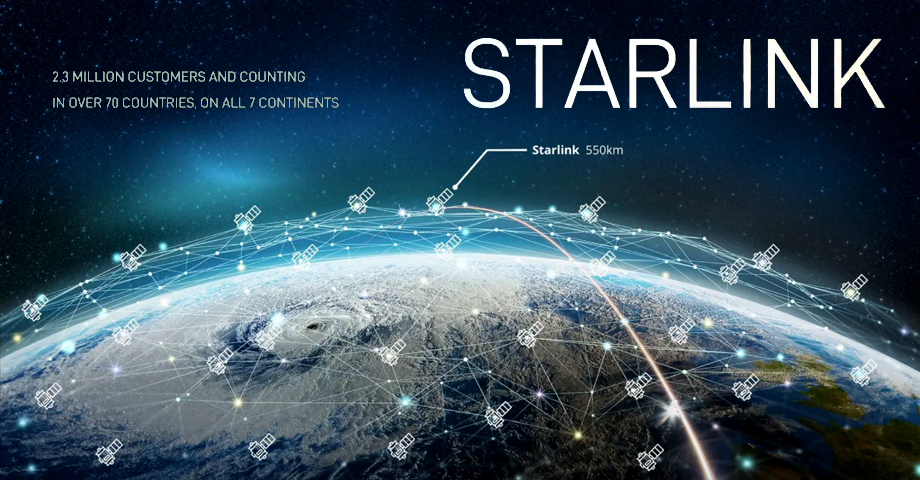 SpaceX Starlink satellite network operates at an altitude of 550km. The company will launch more satellites to build-up the network in orbit. Starlink, 2024.
 Photo of Starlink satellites deployed into orbit. SpaceX, 2024.
 Starlink’s Argon-Hall thrusters are slightly larger than a can of soda and more efficient when using Argon gas as propellant. NASA, SpaceX, 2024.
 Starlink satellites use in-space lasers to communicate despite being separated by 3,000 km.
 Starlink community gateways provide web access via satellites to local networks like that in Analasks Alaska. SpaceX, Starlink, 2024.
 Starlink is working in the next generation of antennas and terminals including a portable model. Starlink, 2024.
 Starlink satellite network connects with regular LTE phones in areas without coverage.
 Space X Starship is the future of heavy lifting. SpaceX, 2024.
 Starship at the launch pad in Boca Chica, Texas. SpaceX, 2024.
 Starship is much taller than and powerful than Super Heavy rockets, about a “Statue of Liberty” taller (46 m).
 Space X Starship is due to launch again in 2024. SpaceX, 2024.

 Starship flights compared. Notice a faster ascent and a longer flame tail in later flights. SpaceX, 2024.
 SpaceX Starbase in Texas, USA will have two launch towers. SpaceX, 2024.
 Hot staging allows the second stage to launch mid-flight, increasing payload by 10%. SpaceX, 2024.
 SpaceX accelerating build and test will result in many more flights in 2024. SpaceX, 2024.
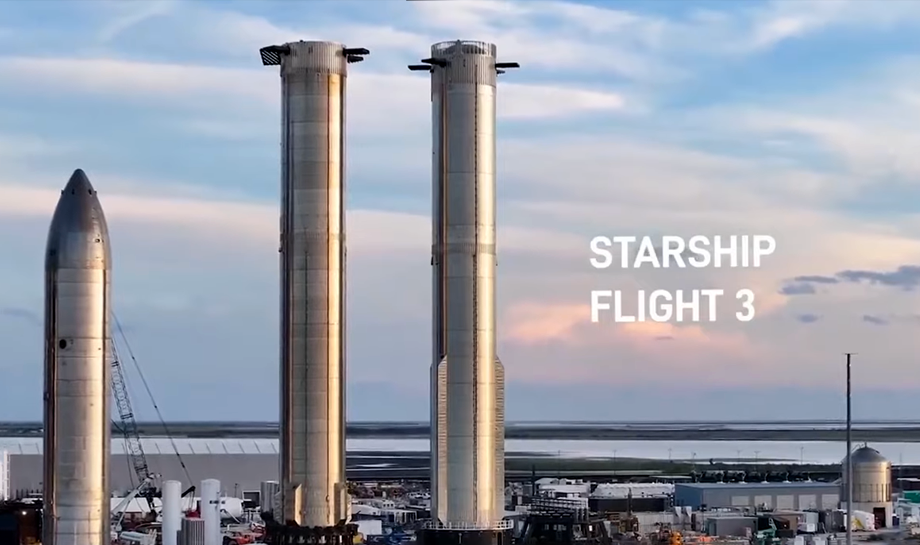 Starship flight 3 is in progress and expected to launch in 2024. SpaceX, 2024.
 Starship will increase the lifting capacity to 150 tonnes. SpaceX, 2024.
 On orbit refilling tank will help transfer fuel (Oxygen and Methane) to Starship for longer journeys. SpaceX, 2024.
 Deployment of larger satellites for the Starlink satellite network. SpaceX, 2024.
 We are going back to the moon with NASA’s Artemis 3 and SpaceX will play a crucial role. SpaceX, 2024.
 The Moon base will be a permanently inhabited spaceport. SpaceX, 2024.
 The goal of SpaceX is to make life multiplanetary (Elon Musk). SpaceX, 2024.
 Mars is the first step for a multiplanetary society (Elon Musk). SpaceX, 2024.